
Open to the Workflow
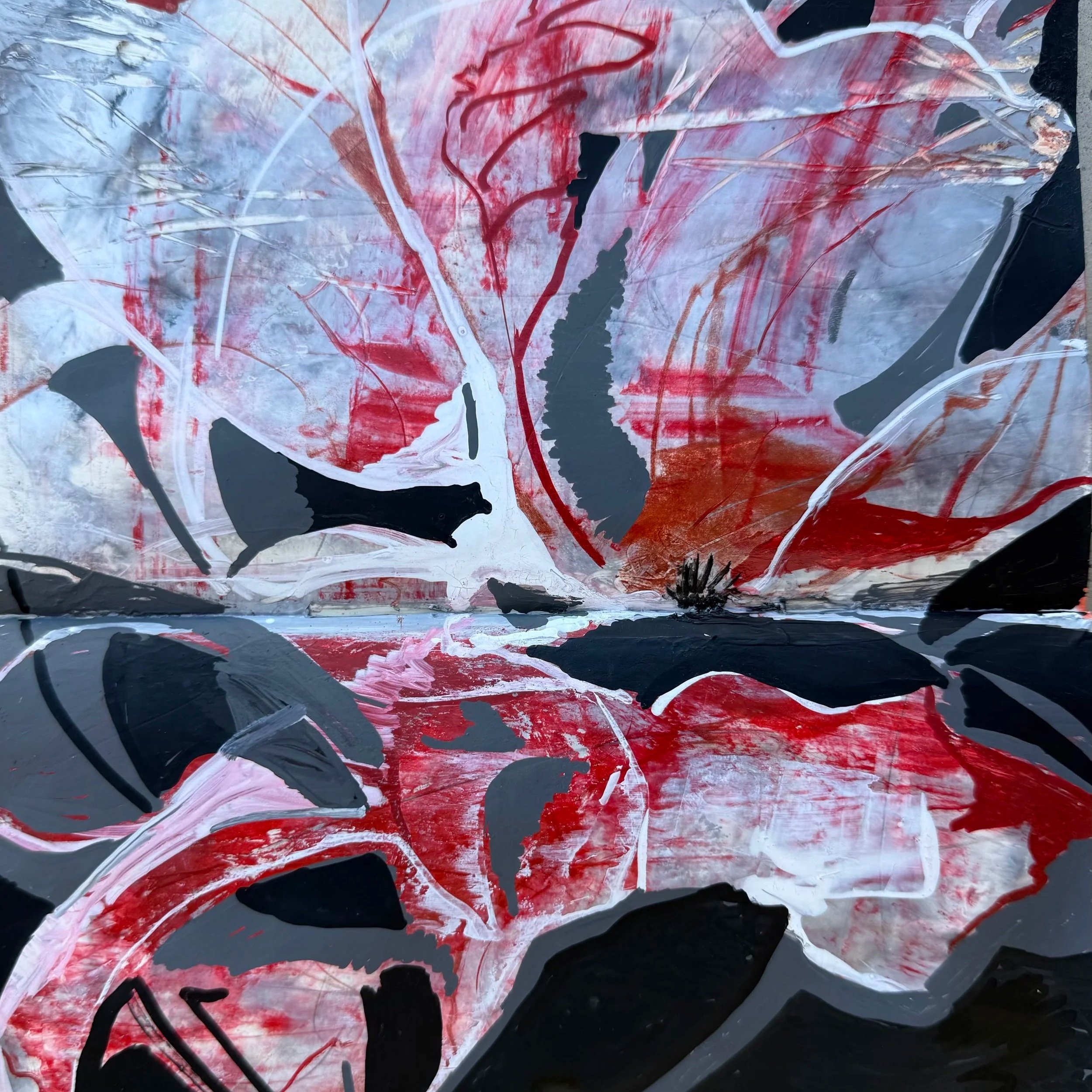
Excerpt from my sketchbook
A few months ago, I came across some advice on how artists can cultivate a mindset that allows them to work more freely and effectively.
Among other things, it suggested using affirmations — phrases intended to positively influence our inner attitude towards the creative process.
One phrase in particular stayed with me:
“I release any resistance that prevents me from fully expressing my creativity.”
It made me wonder: What kind of resistance do I encounter when I paint? And what helps me become more open to the process?
One thing I have noticed is that it helps enormously not to think too much about the outcome.
When I already have an image of the finished painting in my mind, I tend to become attached to an idea of what the work should become. But painting rarely develops in a straight line. One mark changes the next. A colour suggests another colour. A shape asks to be altered.
Taking one step at a time — without already having the next one in my head — creates space to actually see what has emerged and respond to it.
For me, this means letting go of a certain amount of control.
It also means accepting the uncertainty of not knowing where the painting is going.
That uncertainty can be uncomfortable. But it is also where something unexpected can happen.
When I stop trying to make the painting become what I imagined beforehand, I can begin to pay attention to what is actually happening in front of me.
In this way, I connect not only with the artwork, but with the process itself — with the gradual unfolding of the work over time.
Perhaps this is what I am really trying to practise when I paint:
to remain open long enough for the painting to tell me what it needs.
And then, as much as possible, to stay with it.
To immerse myself fully in the act of making.
Not knowing exactly where I am going.
Looking.
Responding.
Making the next mark.
And then the next one.