
A Creative Growth
Sometimes, it takes travelling somewhere new to see our own work – and ourselves – more clearly.
In this journal entry, I share the story of a journey that brought me more than countless impressions, souvenirs, and new encounters.
I tell about a journey that changed the way I see myself as an artist and set several changes in motion.
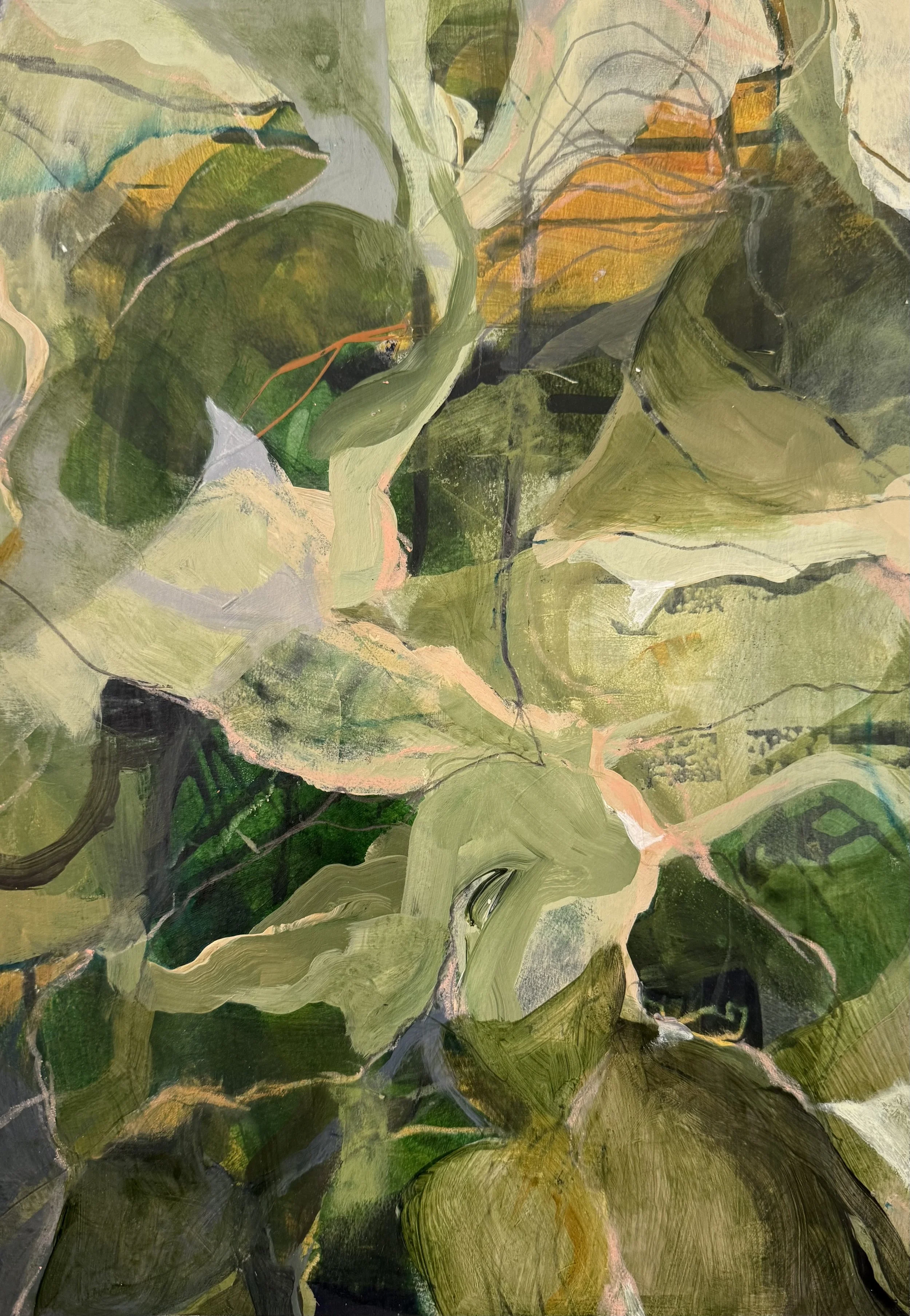
Untitled, Mixed Media on paper
Between Perception and My Own Visual Language
For several days, I travelled to France for an art retreat with Nicola Bennett, joining artists from different parts of the world, each bringing their own experiences, perspectives, and visual language. We came together with a shared curiosity about where inspiration begins – and how what we see becomes part of what we create.
I arrived hoping to find new impulses for my painting. What I returned with was something more subtle, yet perhaps more meaningful: a clearer understanding of my own work, a deeper trust in my instincts, new friendships, and a renewed appreciation for the importance of community within an otherwise deeply individual artistic practice.
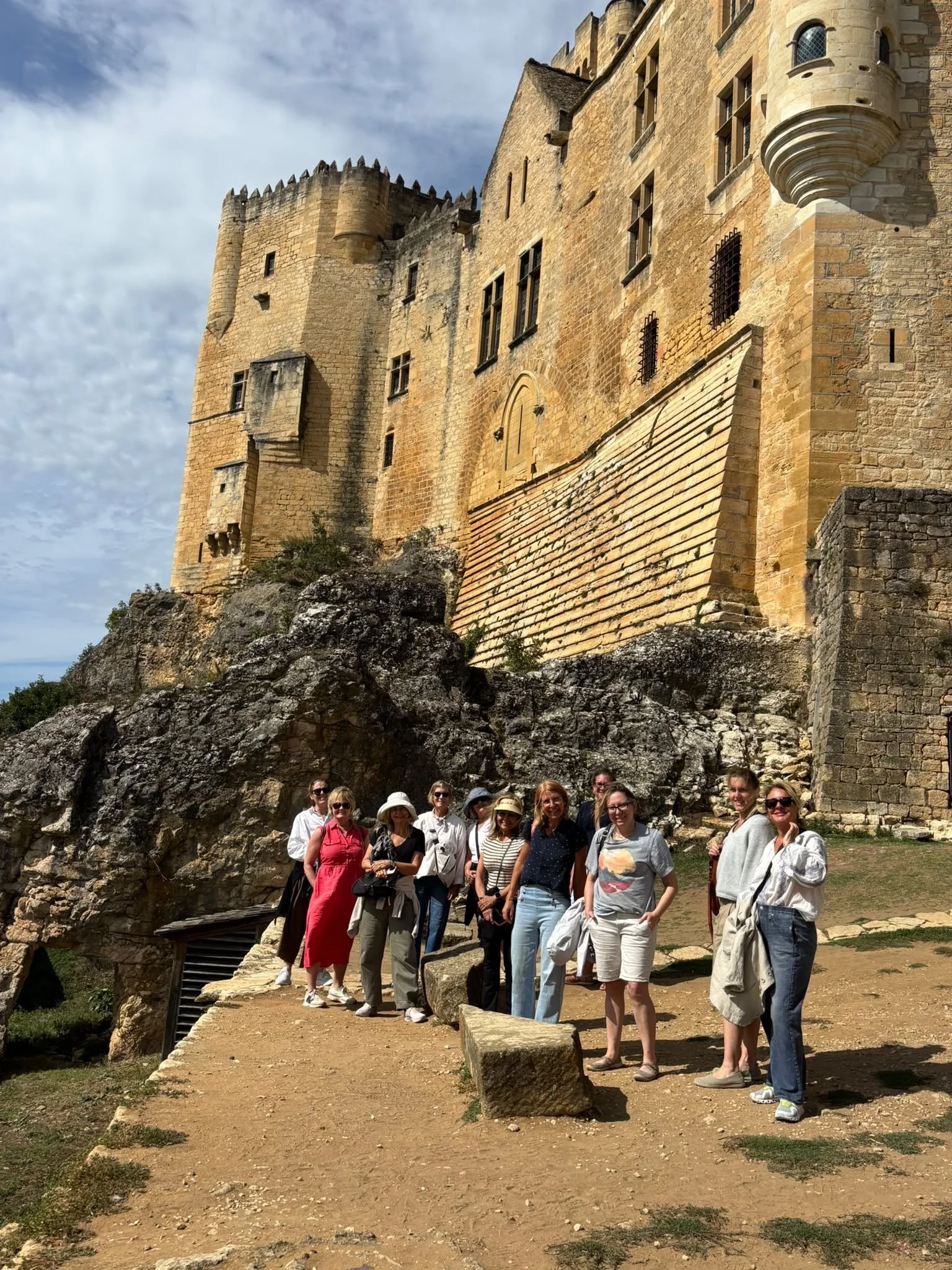
Artists as Explorers
Gathering Traces
Our retreat began not with painting, but with paying attention. We visited markets in several French towns and immersed ourselves in a wealth of colors, shapes, and textures. Flowers and plants, textiles, clothing, jewelry, and regional specialties—unexpected combinations seemed to appear everywhere.
Small shops, cafés, and bookstores also became sources of inspiration. A piece of fabric, the color of a building, a shop window, or an arrangement of flowers could suddenly become the starting point for a drawing or a color idea to return to later.
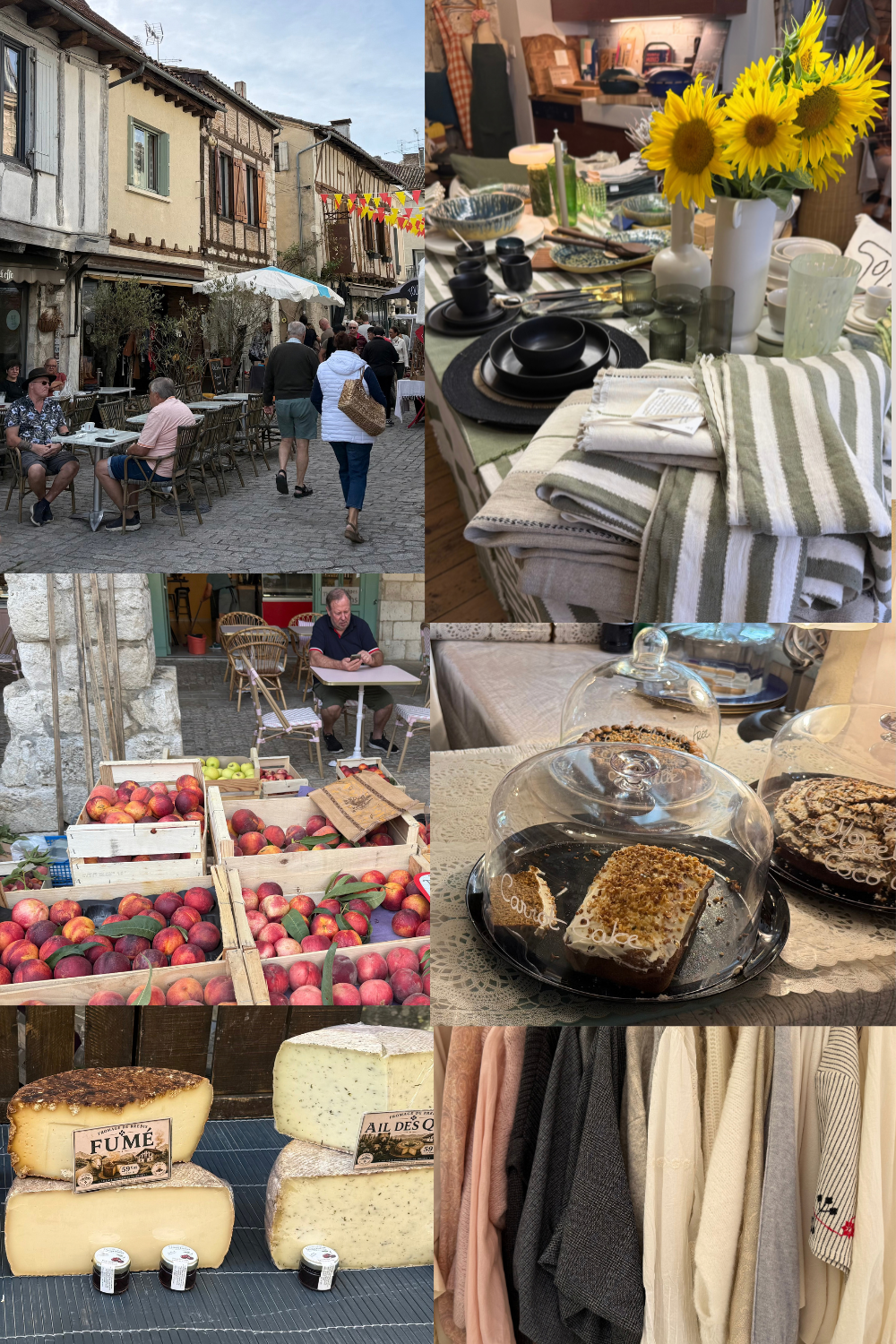
Gathering inspiration not only from the market itself, but from everything that makes up a market day in a French village.
The goal was not to capture what we saw as accurately as possible. More interesting was the question:
What can become part of our own visual language?
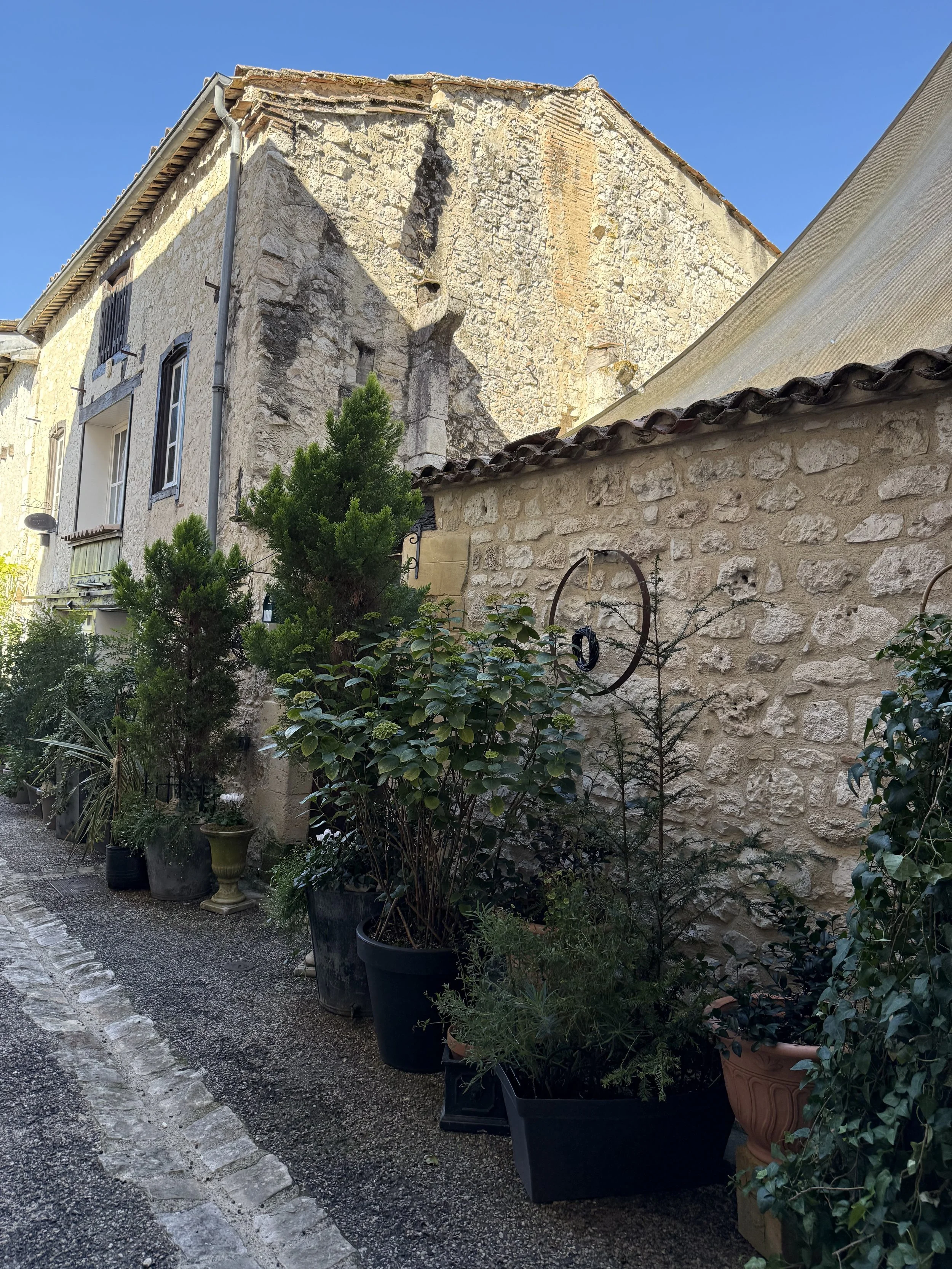
When Perception Becomes a Painting
Nicola’s approach begins with perception—with all the senses. Seeing, touching, smelling, hearing, tasting: the world is not simply observed, but experienced. This sensory awareness becomes the starting point for every painting.
A market is then more than a collection of colors and shapes. There are scents, sounds, materials, light, and movement. Some impressions stay with us without our initially knowing why.
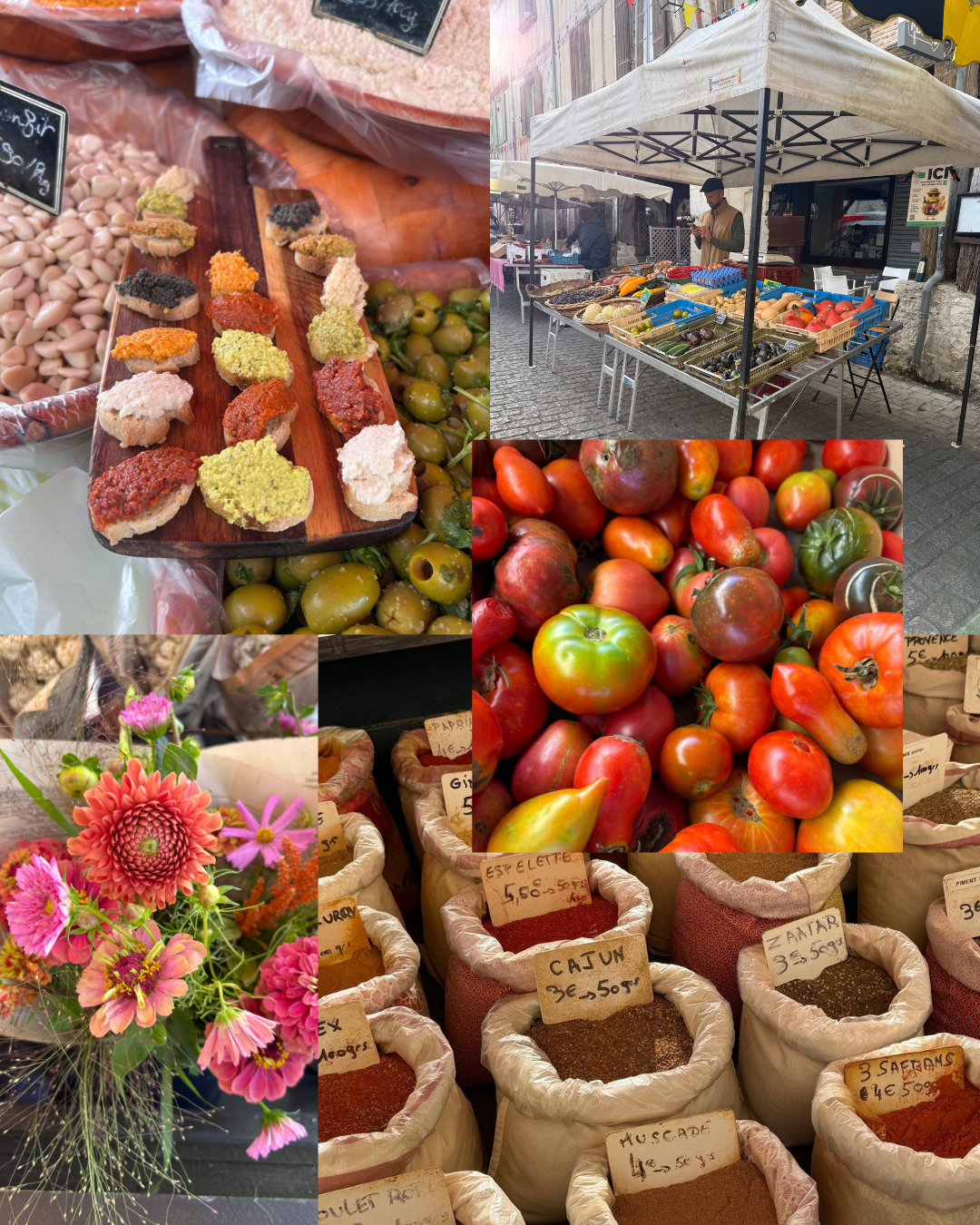
Impressions from the Market
Perhaps inspiration begins exactly there: in the moment when we stop simply looking and begin to truly notice.
We returned to the studio with our photographs, sketches, and collected materials. That was where the real transformation began. The ground of the canvas became part of the process. Shapes and lines developed from drawings. Compositions and color palettes emerged and changed.
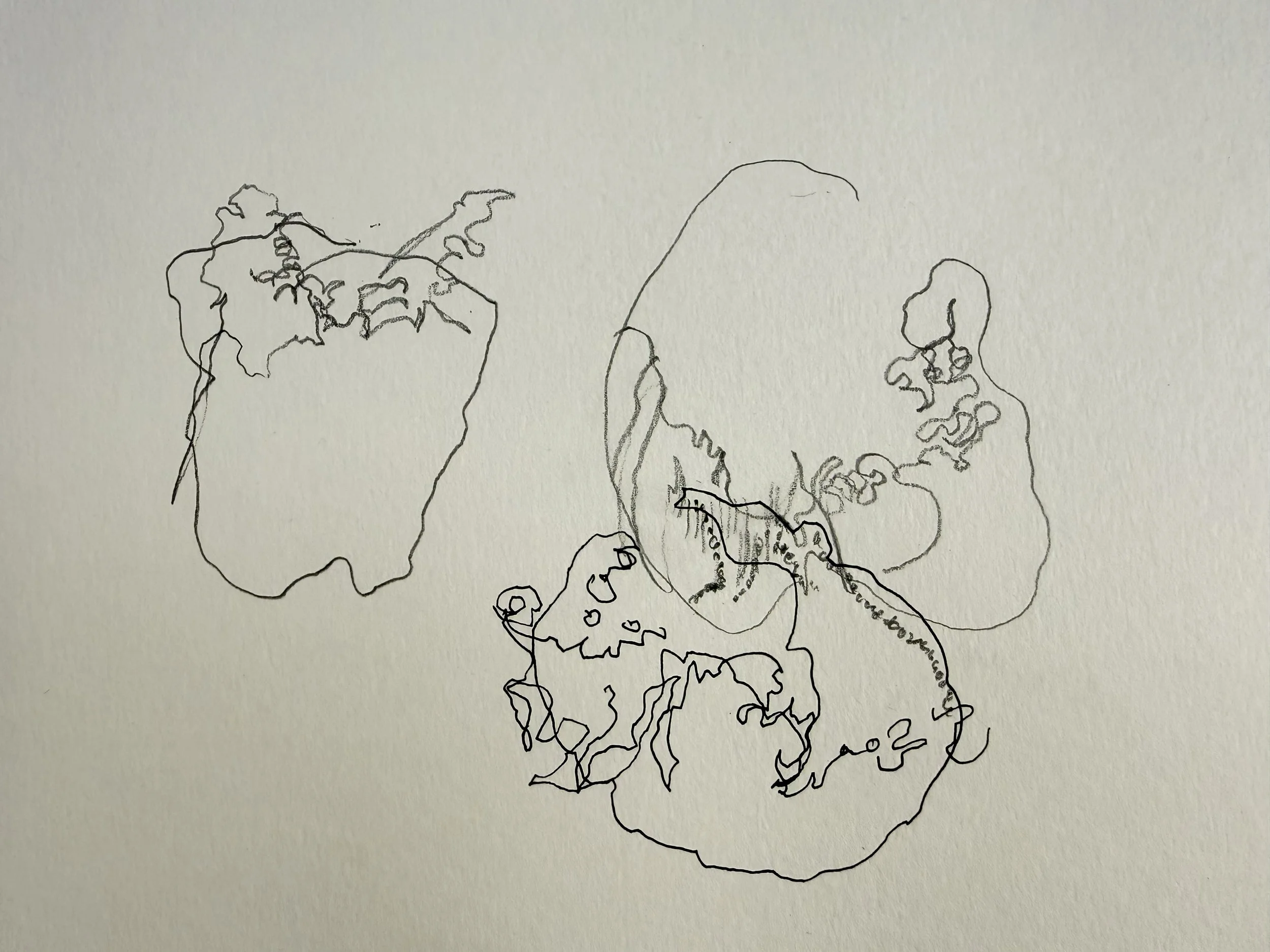
Study, Blind-Drawing, pen and pencil on paper
In Conversation
One of my most important realizations was, surprisingly, not what I still need to learn, but what I already know.
Through the exchange with the other artists, I was able to look at my own work with a little more distance.
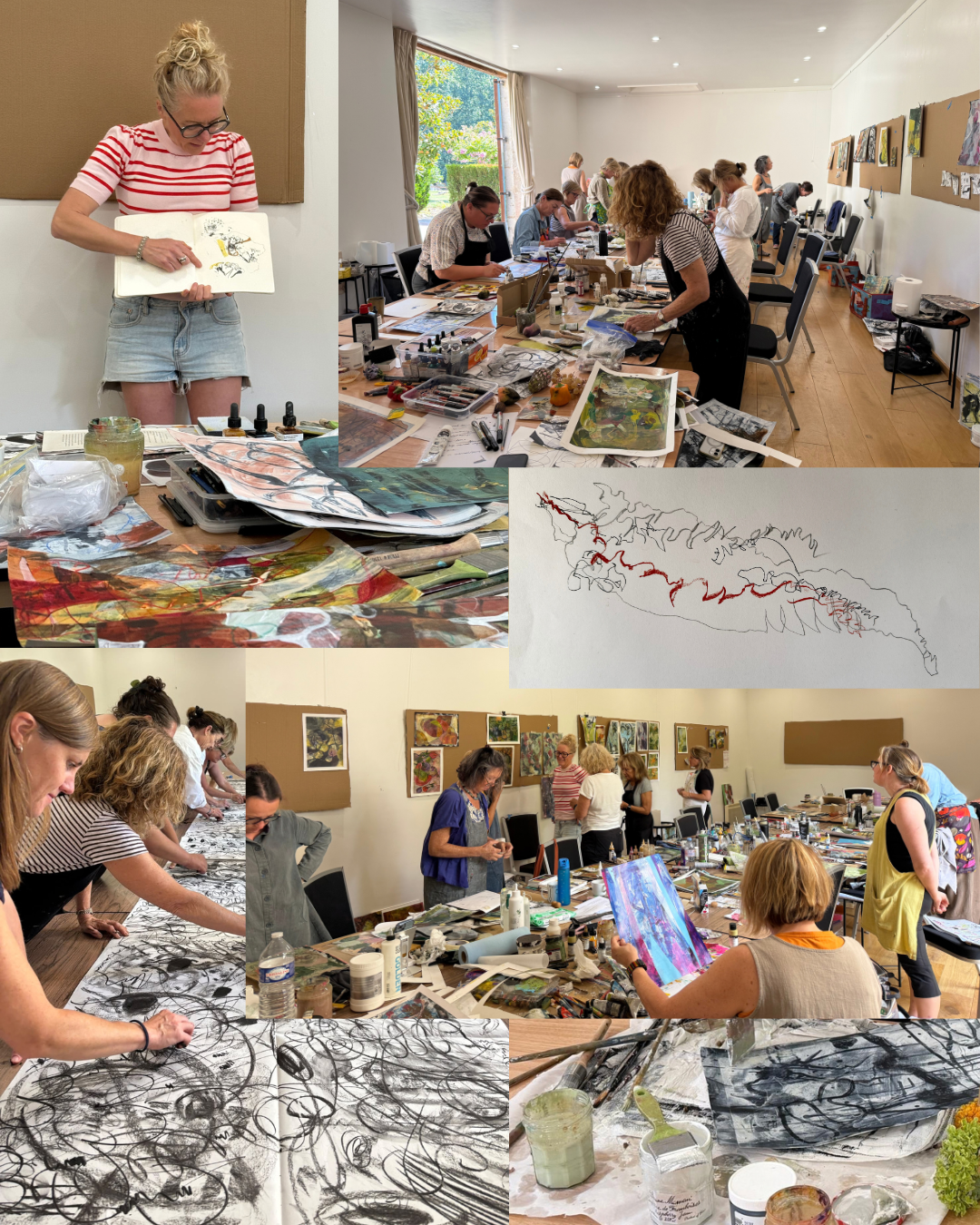
Working together in the studio
I began to understand which aspects of my painting are already working—and where I don't need to constantly keep reworking or changing things.
Artistic growth does not always mean correcting a perceived weakness. Sometimes it means recognizing your strengths and learning to trust them.
And then there was the group.
Conversations between working sessions, looking at each other's paintings, different approaches, and the stories behind the work expanded my own creative thinking. The exchange itself became part of the artistic process.
Everyone felt encouraged and motivated, and the atmosphere was full of energy.
Making Room
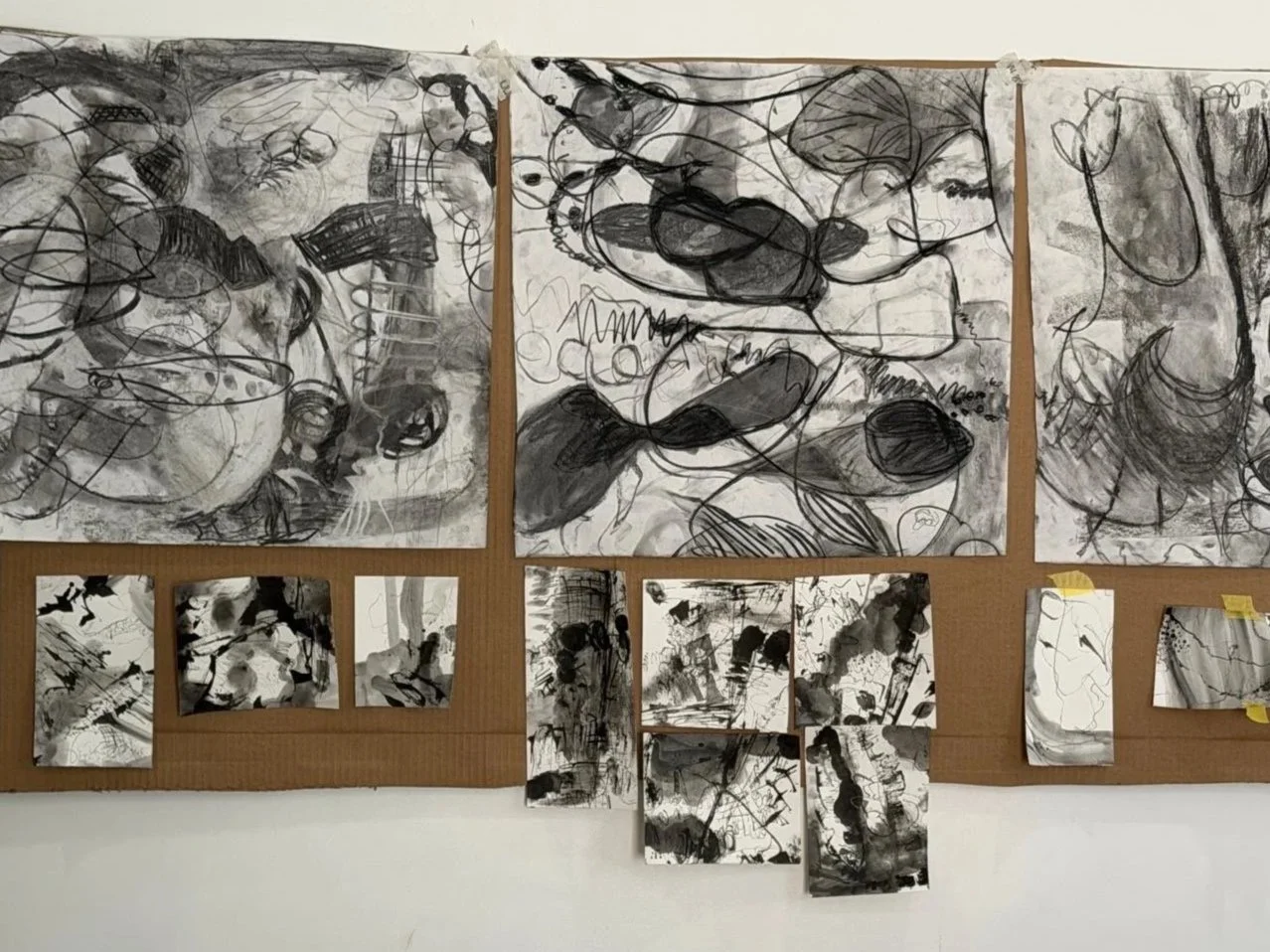
Drawings from the workshop
Often, the greatest internal resistance in painting is the feeling that we always need to know exactly where a painting is going.
During the retreat, I was reminded that a painting is allowed to change.
A color decision can disappear. A line can initially feel like too much and later turn out to be exactly right.
Composition does not emerge solely from planning, but also from responding. Allowing space for that uncertainty is a form of trust—in the process and in our own perception.
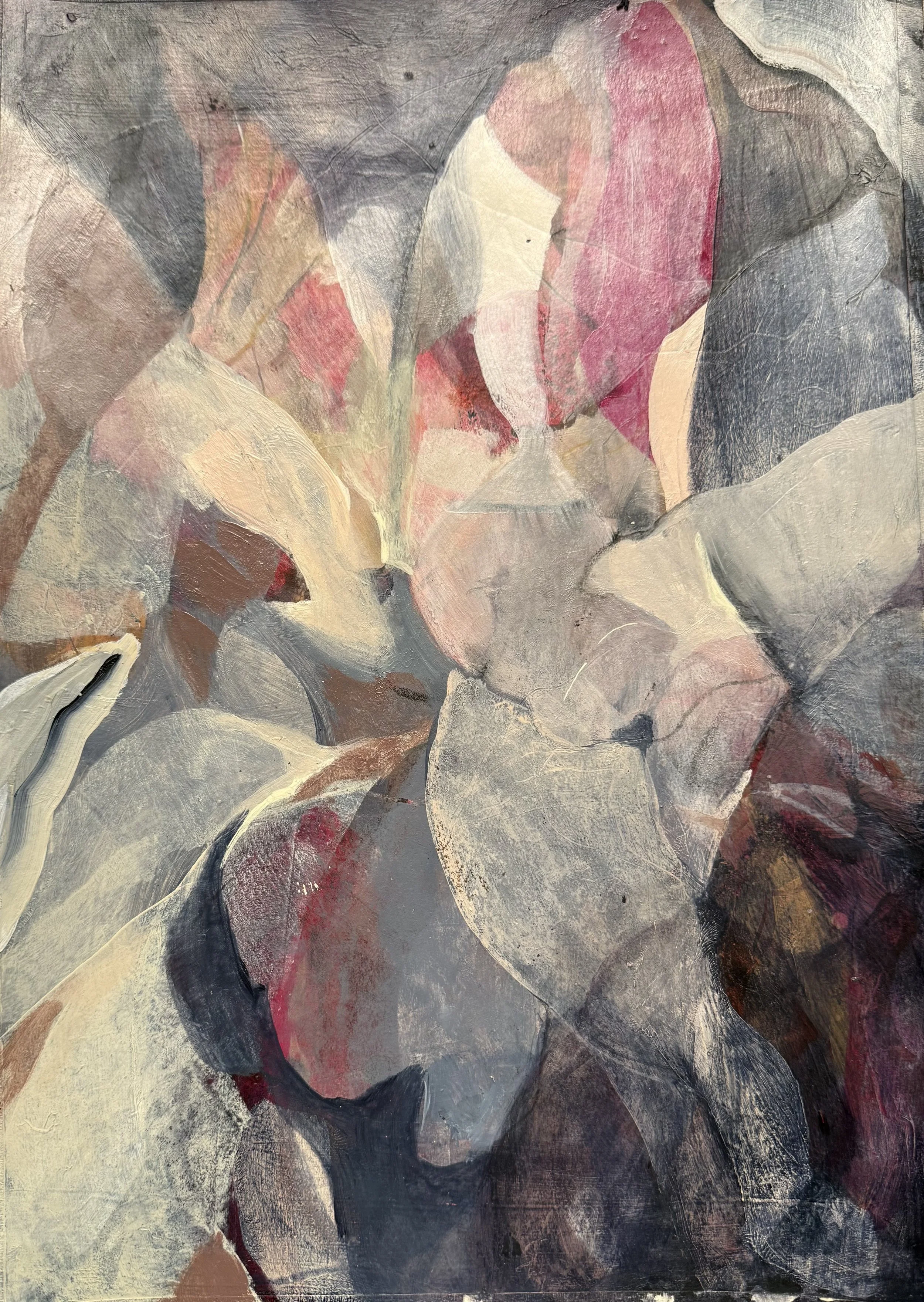
Work in progress, Mixed Media on paper
Returning With New Eyes
Of course, I am bringing home photographs, sketches, color palettes, and small observations.
But more importantly, I am bringing home a different way of seeing.
A heightened awareness that changes how I perceive places, people, light, colors, details, and everyday moments.
The journey continues in the way I look at the world long after I have returned home.
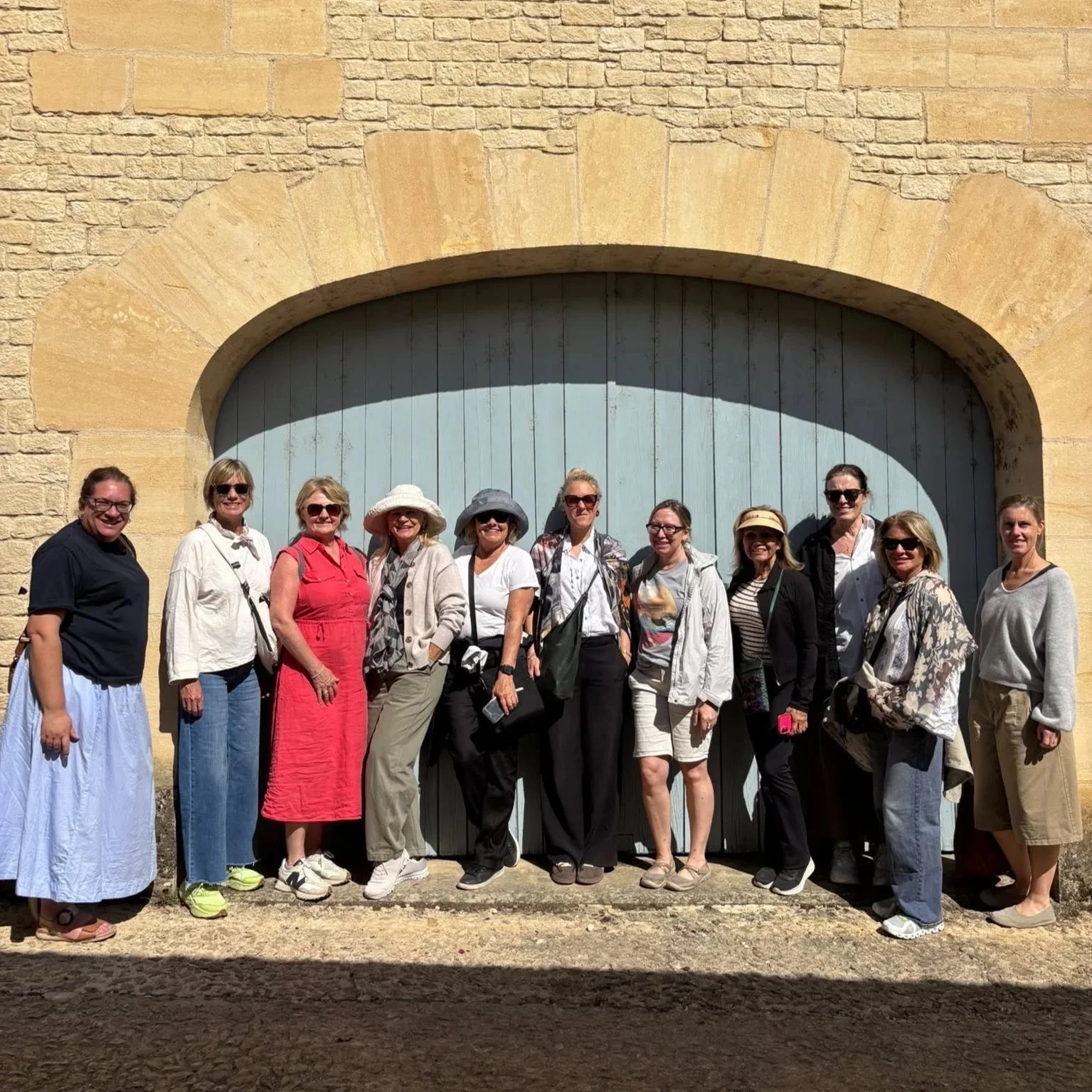
Shared journeys create lasting connections.
My Takeaways
Stepping outside my comfort zone is non-negotiable. Growth begins where certainty ends.
Inspiration is everywhere. The challenge is not finding it, but recognising what truly speaks to me.
Why I paint. Understanding the motivation behind my work gives it greater clarity and direction.
Recognising what already works is also a form of progress. Not everything needs to be changed, corrected, or improved.
Where I want to develop next. The next step doesn’t always have to be a huge leap in a new direction. Sometimes, it’s about looking more closely at the details.
Learning to paint is a lifelong journey. There is always more to explore, question, refine, and discover.
Growth happens through exchange. Painting alongside others opens up new perspectives and helps us see our own work differently.
Visibility matters. Creating the work is only part of being an artist; allowing others to discover it and engage with it matters just as much.
And above all: Share the Joy! Art is not only about creating, but also about sharing the curiosity, energy, and joy that come with it.
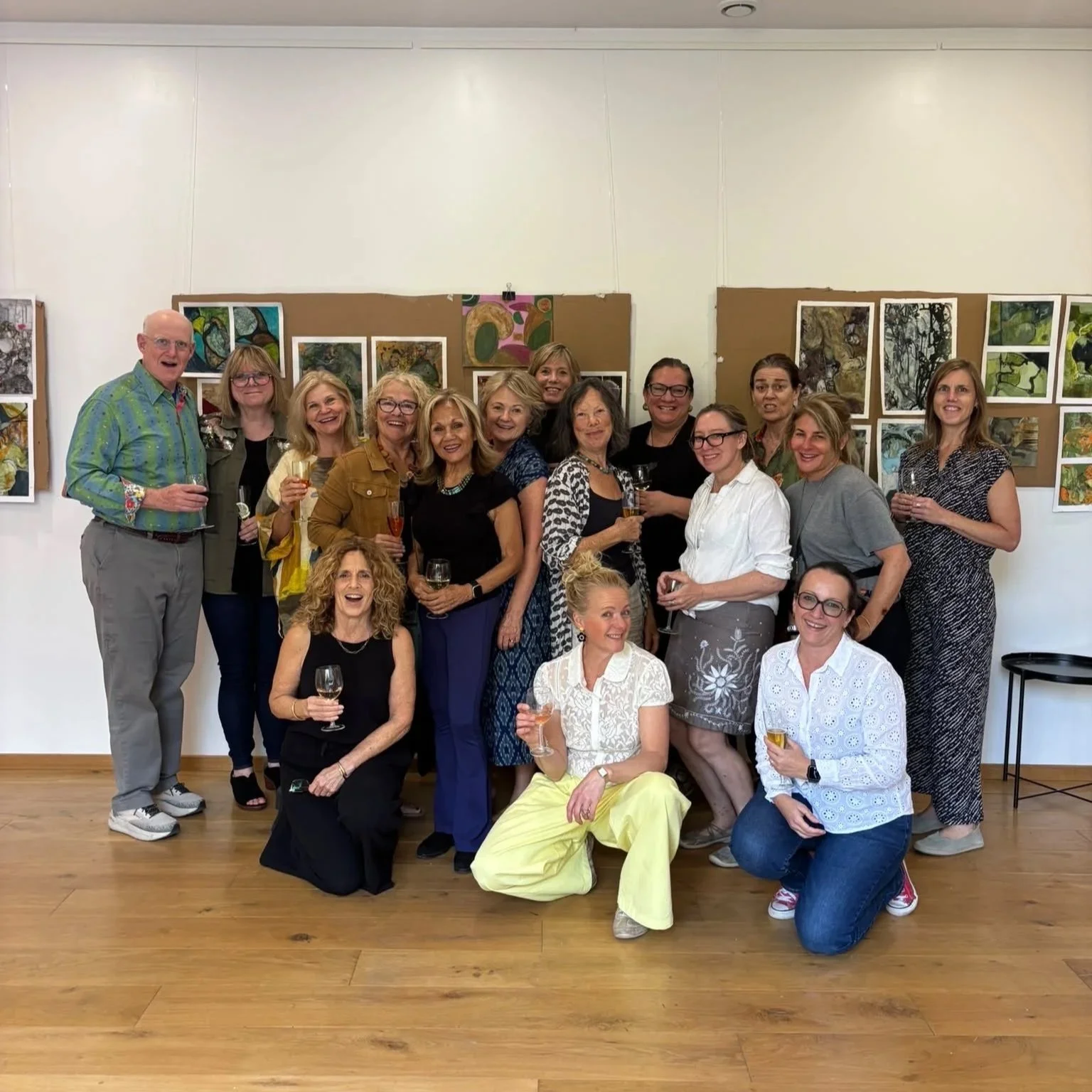
Celebrating ourselves at our final exhibition.