
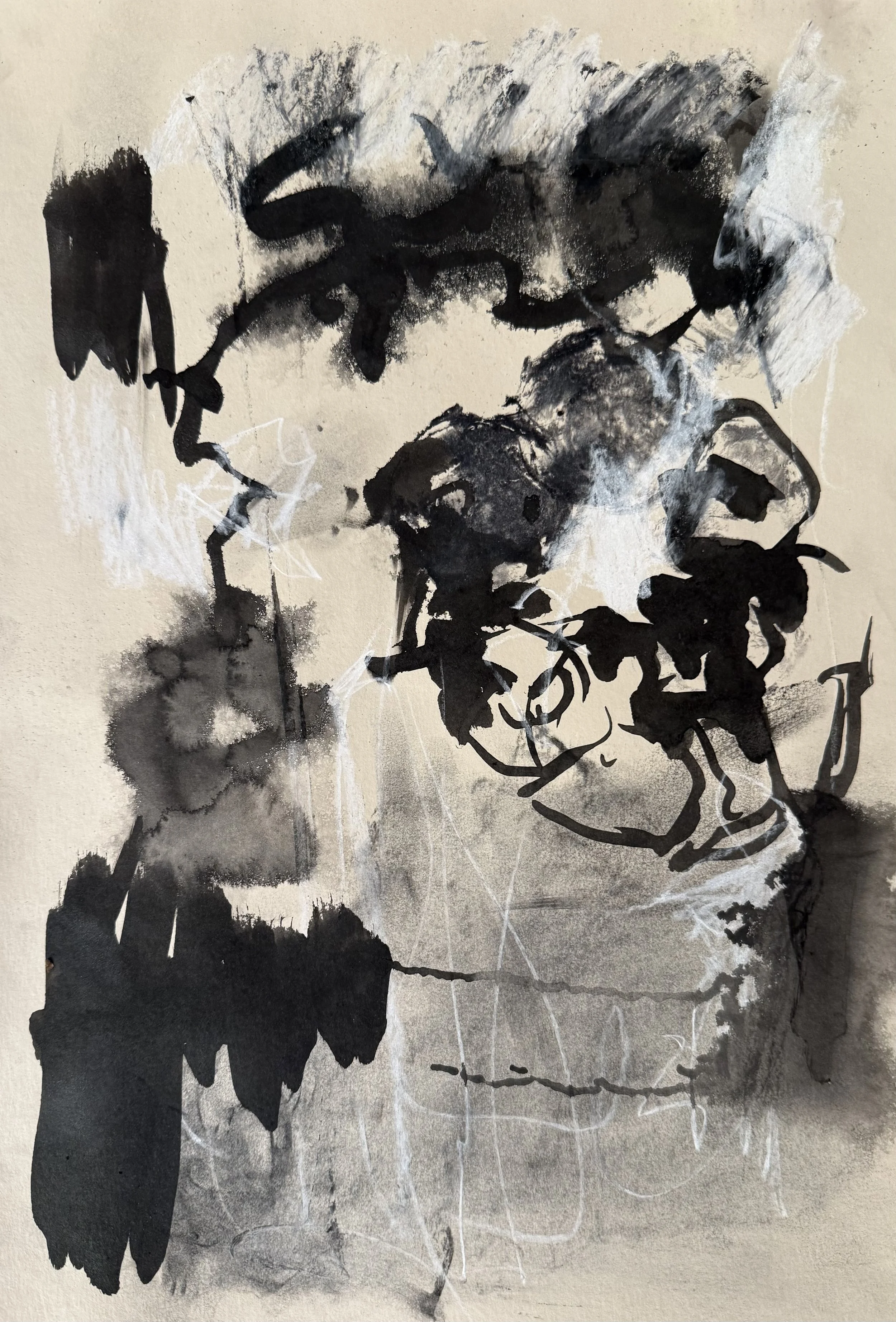
Study; Ink, crayon and charcoal on toned paper
What happens when you stop looking for something to paint and start exploring what a line, a gesture, or a simple mark can evoke? The physical process of painting is reflected in the gestures, lines, and shapes that emerge throughout the process. These marks carry the movement and energy of the body into the painting, gradually forming a structure that serves as the foundation for the composition. Rather than simply depicting something, they become an essential part of how the painting takes shape and evolves.
Beyond the Motif
In my last journal entry, I explained how I can evolve a painting by analyzing its color palette. I described how I build on a color harmony once I have found it. Another important element in this process is finding the right shapes and lines to build a composition.
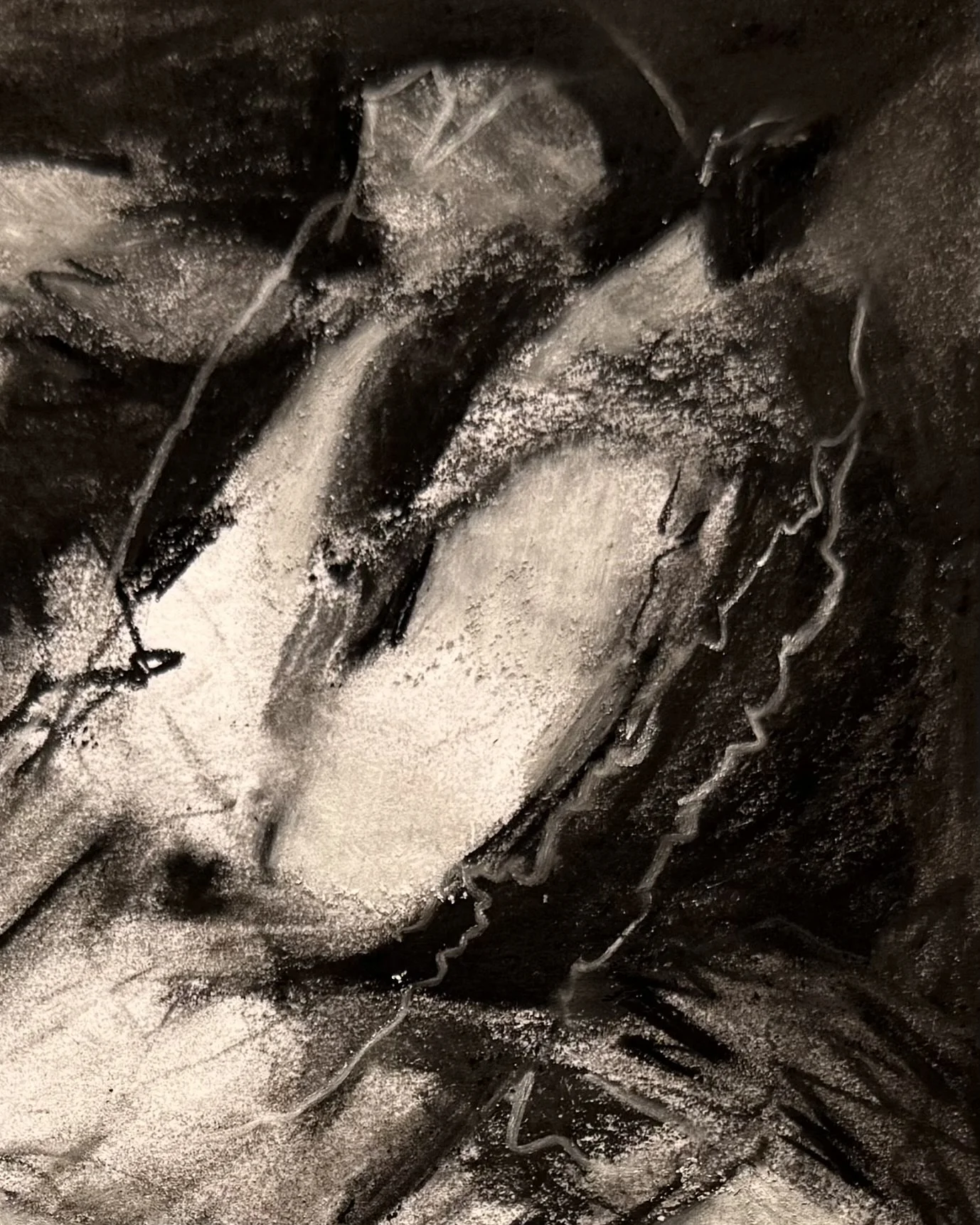
Study, Charcoal and crayon on paper (detail)
Of course, there might be a motif that serves as a starting point. As an abstract painter, however, I try to avoid shapes or forms that resemble recognizable figures or objects. Instead, I want the viewer to get an impression, a loose idea, or a memory of something. I want them to sense an atmosphere or a mood and connect with their inner lives and deeper emotions.
For me, this works best when an associative process begins while looking at a painting, rather than when the viewer focuses on a specific motif and analyzes it.
Building a Framework Through Gesture
My process of finding shapes and lines is therefore very intuitive. Gesture marks, combined with more intentional drawing movements throughout all the layers, gradually build a kind of structure that gives the painting its framework.
These marks do not necessarily represent anything specific. Instead, they create relationships, tensions, and rhythms within the composition. Through the interplay of spontaneous gestures and more deliberate movements, shapes and lines begin to evolve and find their place within the painting.
Exploring Shapes Through Charcoal
I regularly set aside time for sketchbook practice, filling pages with marks made using charcoal on paper. Usually, I try to build a composition, but it doesn't have to become a finished painting. Instead, I continue working with charcoal until the process feels complete. The outcome is a black-and-white composition.
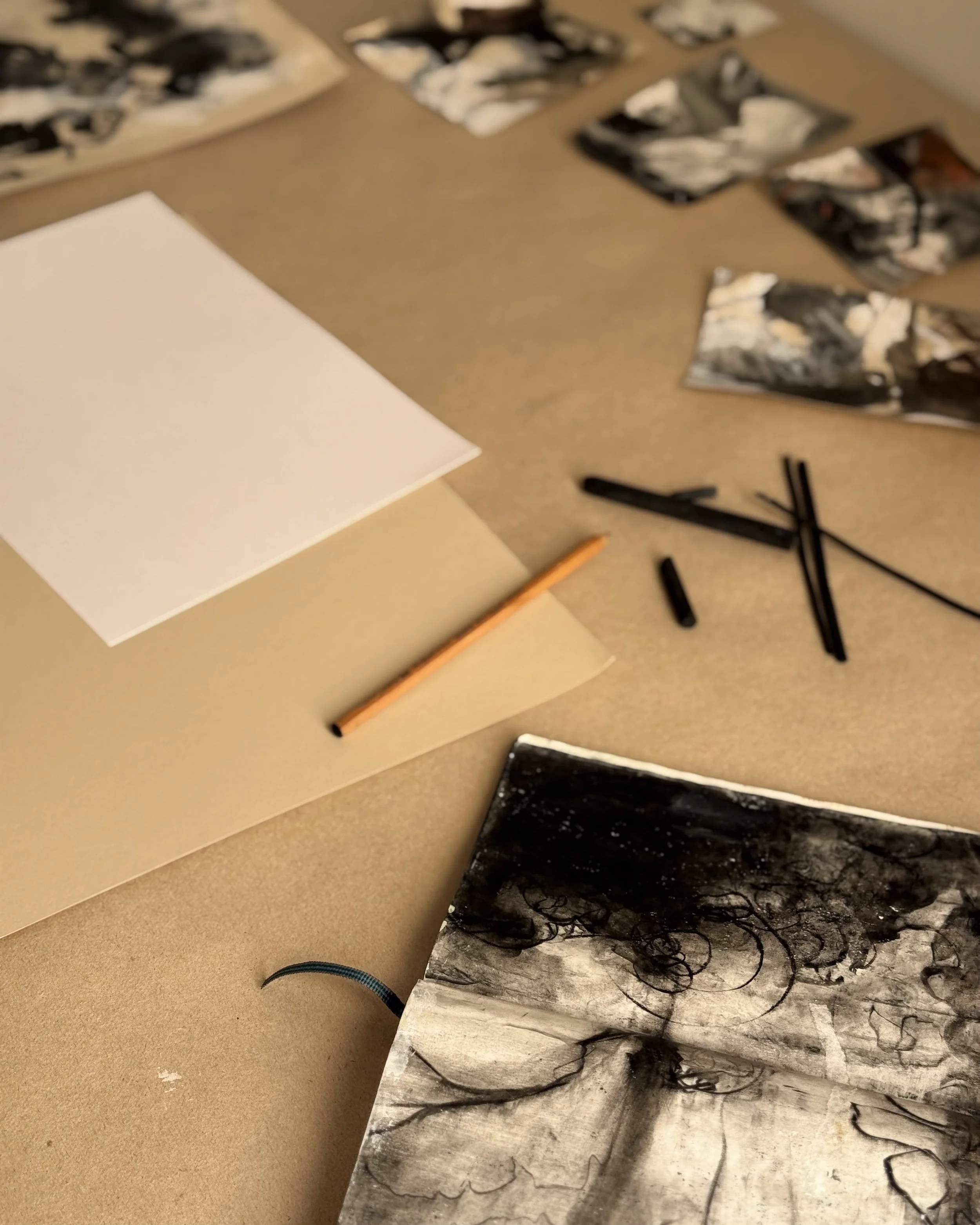
In my studio
Moving between different shades of white, grey and black only allows for a playful engagement with the act of making. The process involves both applying and removing material: making marks with charcoal, smudging them, shifting between lighter and darker tones, and using an eraser to create new possibilities.
Focusing on light and dark without having to think about color hues has a freeing effect. It allows me to immerse myself in the sensory experience of the material itself — observing what the charcoal does and how it responds to my gestures.
This practice also helps me develop a greater awareness of my own sensory perceptions.
Of course, the same approach can be explored with other materials, such as pencils, crayons, or wet media like Indian ink, acrylic paint, black and white gesso, or even watercolor. Working with a single color and creating a monochromatic painting can offer a similar experience.
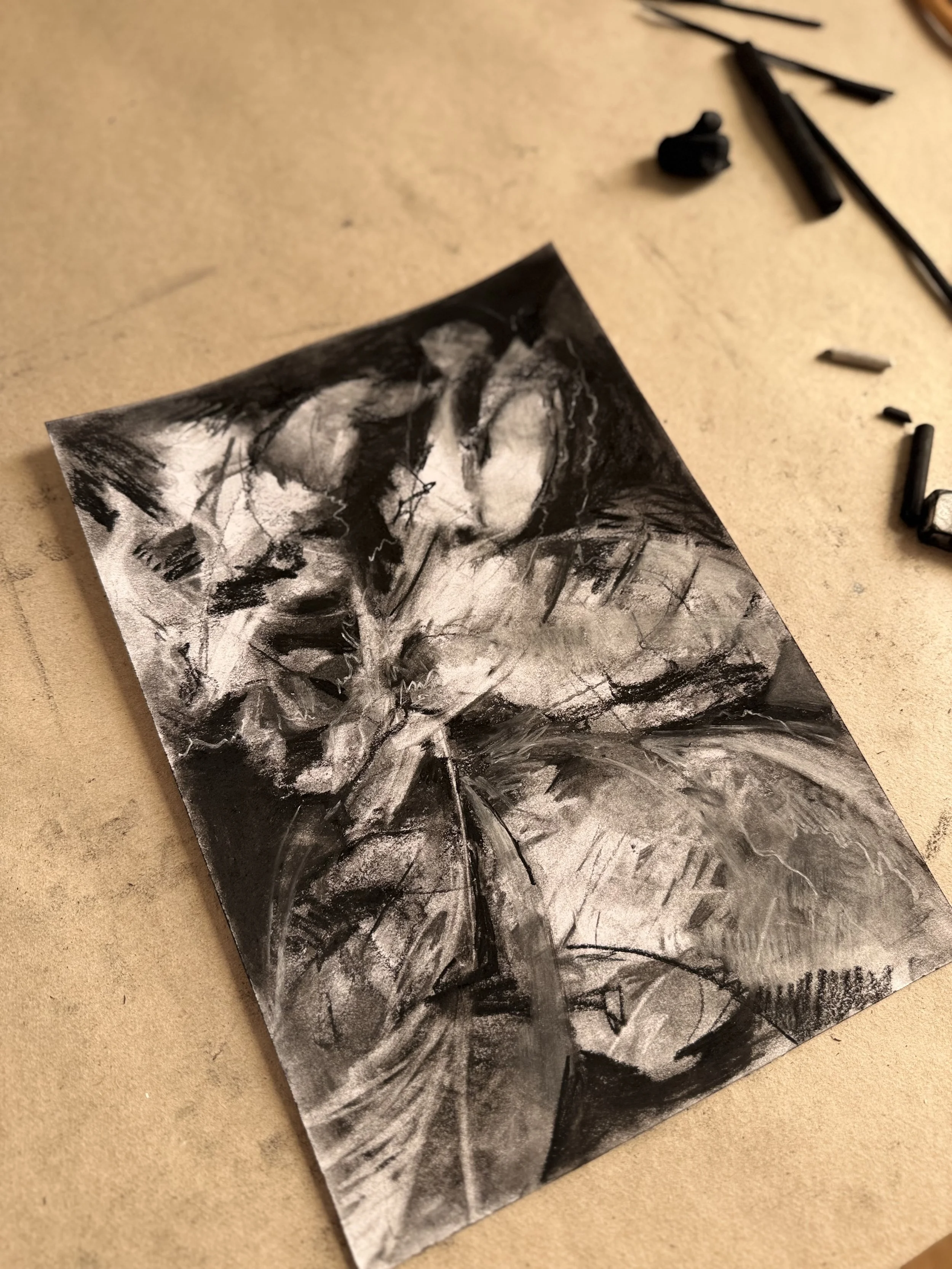
Study; Charcoal and crayon on paper
The Sensory Experience
For me, the sensory aspect is the most important part of this practice.
In today's world, where we spend so much time in virtual environments and abstract contexts, I find it increasingly important to reconnect with our physicality, bodily awareness, and the emotional resonance that can emerge from this connection.
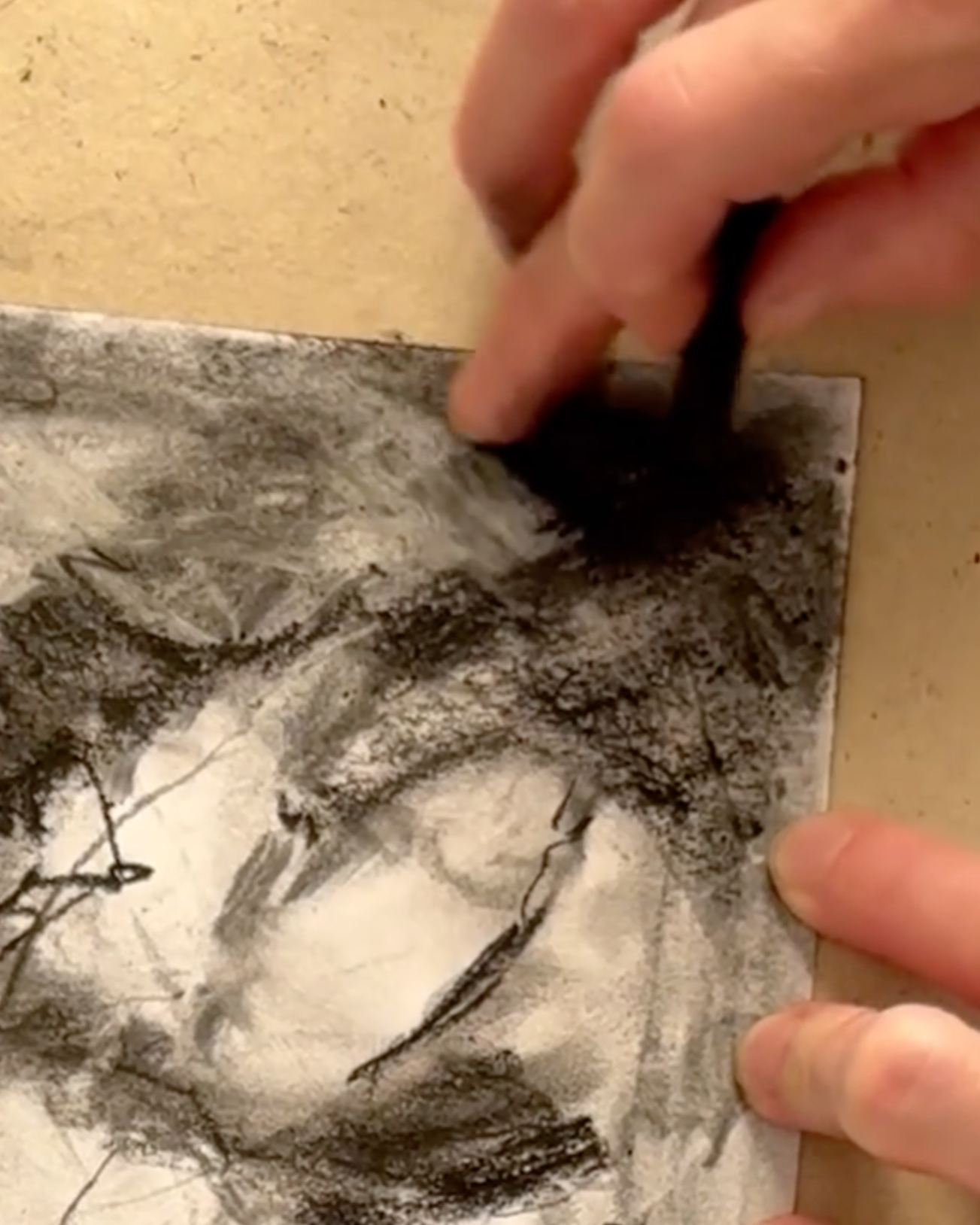
The connection with the material is essential for creating authentic works of art.
Working directly with a material offers an opportunity to slow down and become more attentive to physical sensations: the resistance of the paper, the softness of the charcoal, the pressure of a gesture, or the feeling of smudging a mark with my fingers.
That’s why I prefer charcoal. I enjoy having my fingers directly involved in the process. My hands become part of the act of drawing, making the physical interaction with the material an essential part of the experience.
From Observation to Abstraction
As I explained in another journal entry, I sometimes use specific sources of inspiration for my paintings. These might be botanical motifs or a particular color palette that I happen to discover in a place I have visited.
When I start with a recognizable object, such as a botanical form, I might explore it through blind drawing. By drawing without looking at the paper, I can loosen my habitual way of representing what I see and discover more abstract shapes and lines to use in a painting.
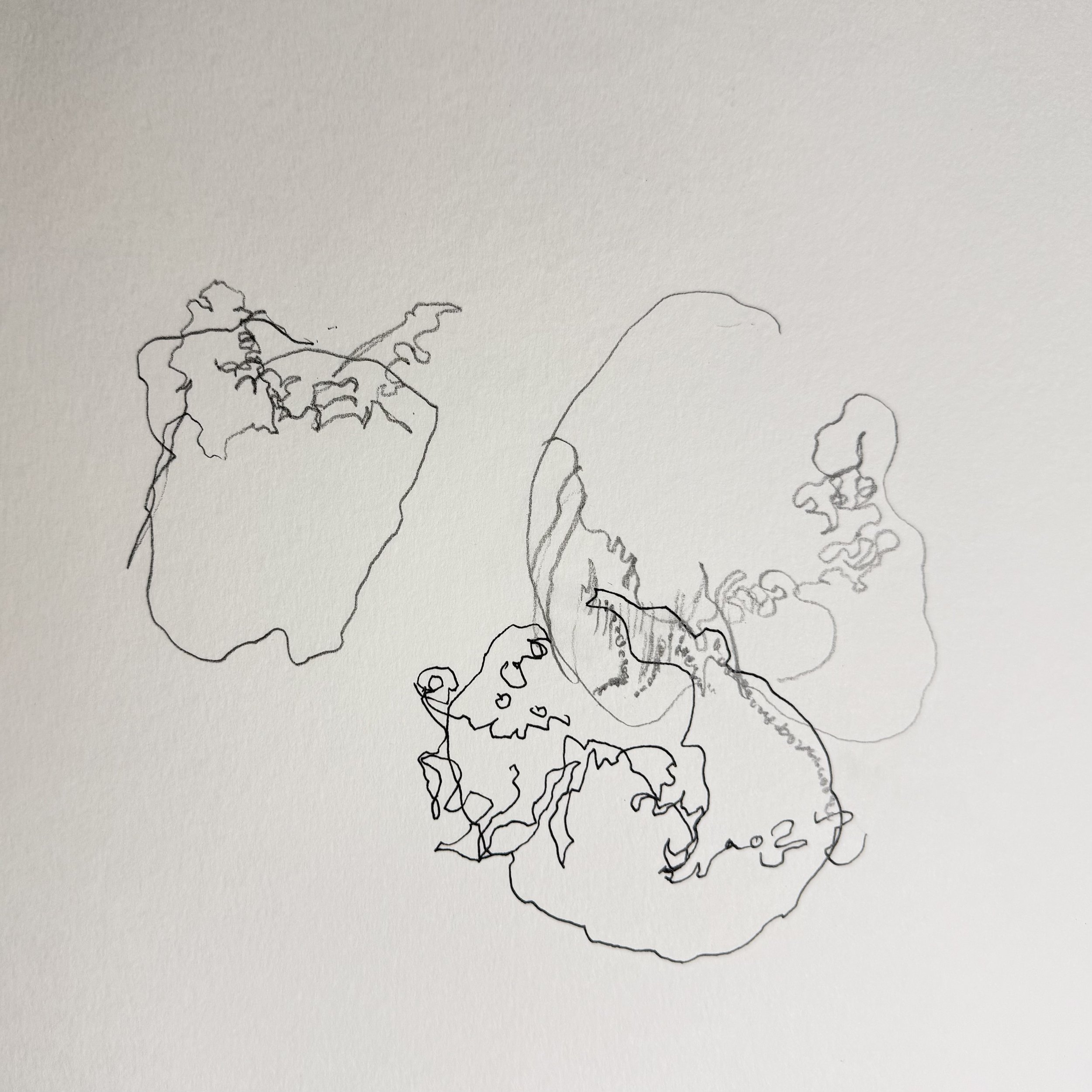
Blind-drawing; Ink and pencil on paper
In this kind of drawing, the gesture takes precedence over accuracy. The resulting lines may be fragmented, exaggerated, or unexpected. Rather than reproducing the motif, I can use these marks as a starting point for further exploration.
The original subject becomes less important as the process develops. What remains are shapes, movements, and relationships that can evolve into something independent of the initial motif.
A Simple Practice
The next time you feel stuck or find yourself searching for the right shapes and lines in a painting, try setting aside the goal of creating a finished artwork. Instead, use the following exercise to reconnect with your senses and explore what emerges.
Choose your material. Start with charcoal and paper, or use any drawing or painting medium you enjoy working with.
Make marks without a plan. Fill a page with spontaneous gestures, lines, and shapes. Resist the urge to make them represent something recognizable.
Explore light and dark. Add darker areas, smudge existing marks, and use an eraser to bring back lighter spaces. Focus on the relationships between these areas rather than on color.
Pay attention to your senses. Notice the resistance of the paper, the movement of your hand, the texture of the material, and the pressure you apply. Let the physical experience guide you.
Combine intuition with intention. Once you have made a range of spontaneous marks, begin to introduce more deliberate lines and shapes. Observe how they interact and how a composition starts to emerge.
Keep working without aiming for a finished result. Add, remove, obscure, and rediscover marks until the composition feels complete for this stage of the process. It doesn't need to become a painting.
Reflect on what you have discovered. Step back and look at the result. Which shapes or lines create a particular mood? What associations arise? Is there a gesture or relationship worth carrying into a future painting?
Let the Process Lead the Way
Finding shapes and lines doesn't always have to begin with a motif or a clear visual idea. Sometimes, the most meaningful starting point is the physical experience of making marks and responding to what happens on the paper.
The key insight is that by shifting your attention from the desired outcome to the sensory process, you create space for unexpected forms, personal associations, and new compositional possibilities to emerge.
Rather than asking yourself what you should draw, try asking what the material invites you to do next. You might discover that the shapes and lines you were searching for have been there all along, waiting to evolve through your gestures, your attention, and your willingness to explore.
Find Out More
Find my journal post on how a a color palette evolves here. In order to learn more about specific sources of inspiration for my paintings click here.
By the way, you can watch a Reel of this process on my Instagram.