
How Organic Forms Become Visual Language
The most interesting discoveries in my sketchbook often happen when I let go of a plan. Rather than working towards a specific result, I allow myself to experiment with collage and acrylic paint, following whatever catches my attention. These sessions are a welcome change of pace when I need some distance from a project and want to make room for new ideas. There is no agenda to follow, just materials to explore and the freedom to see where they might lead.
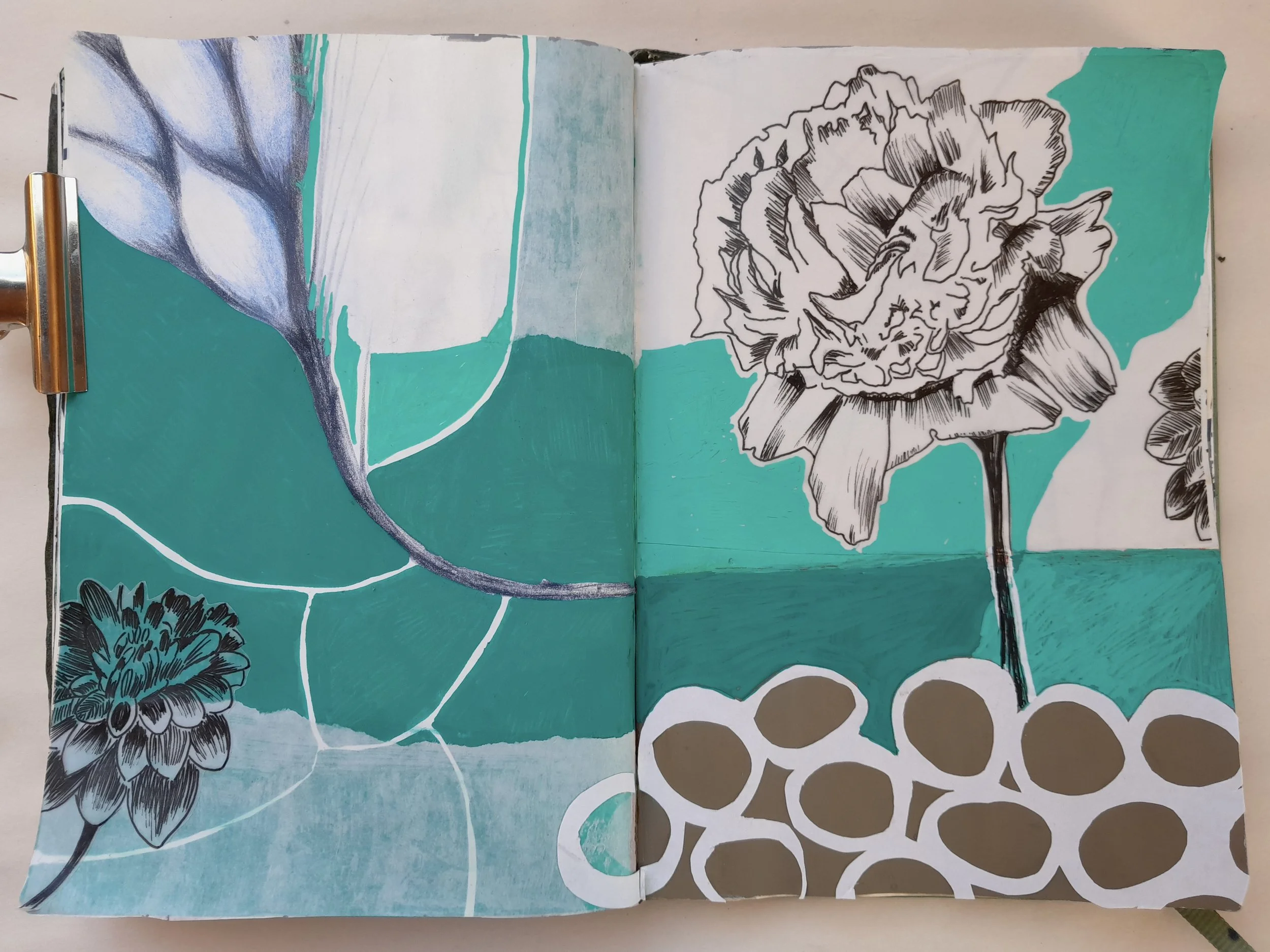
This sketchbook page was created with the aim of depicting botanical forms at varying degrees of abstraction using different materials: colored pencil, acrylic markers, acrylic paint, and collage elements.
Starting with What I Love
My free experiments usually begin with the materials themselves. I love bringing different papers together, exploring their textures and rearranging them in unexpected ways. Colour plays an equally important role. Once I discover a colour combination that feels right, I find it much easier to let go and start playing.
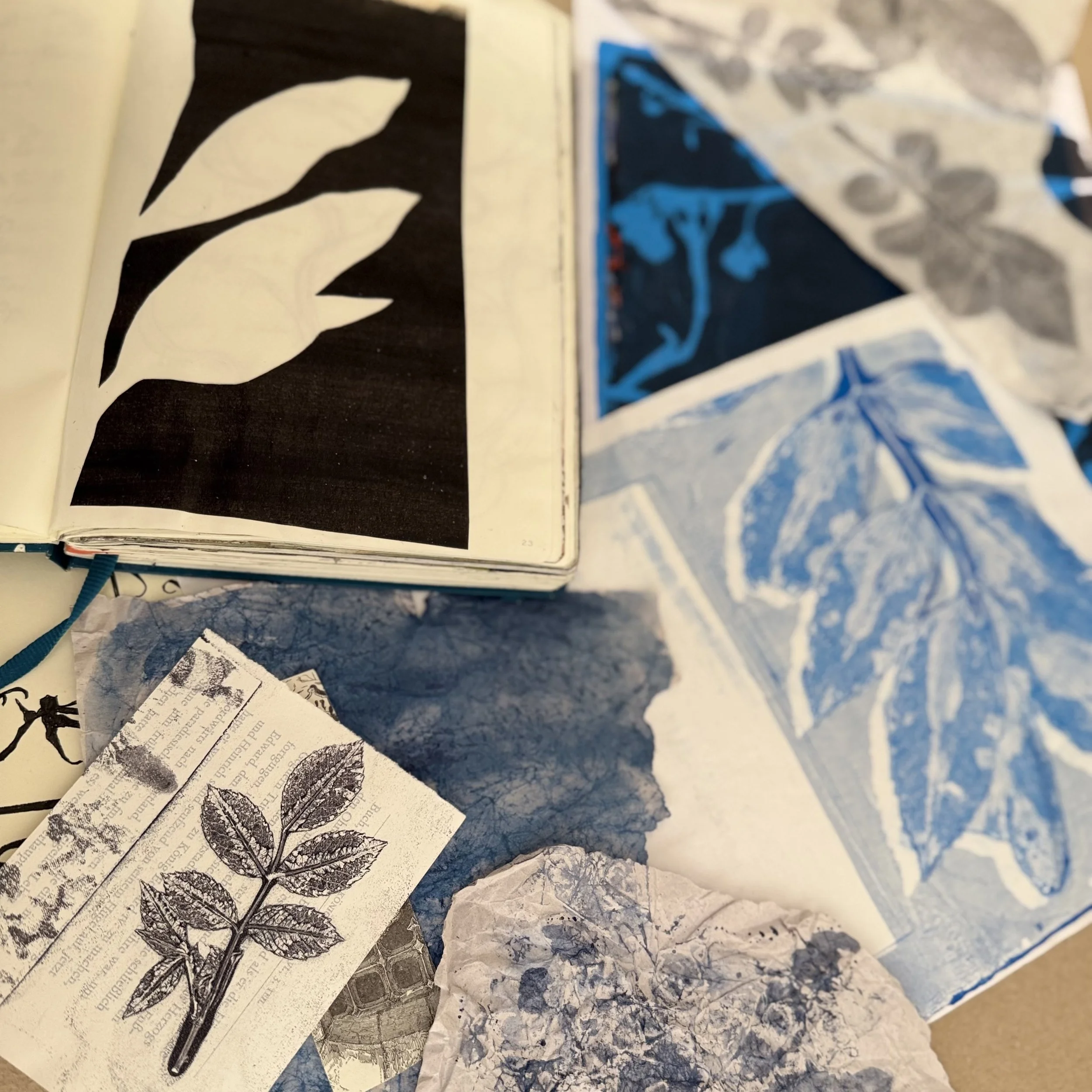
A collection of my collage papers.
As a surface designer, I have spent much time working with organic forms inspired by nature. Sometimes I studied plants closely, trying to capture their shapes through drawing. More often, I created stylised versions, simplifying their structures and exploring the relationship between line, shape and colour.
Until recently, I had a large garden where I could step outside to take photographs or draw directly from nature. These days, inspiration might just as easily come from a bunch of flowers on my dining table.
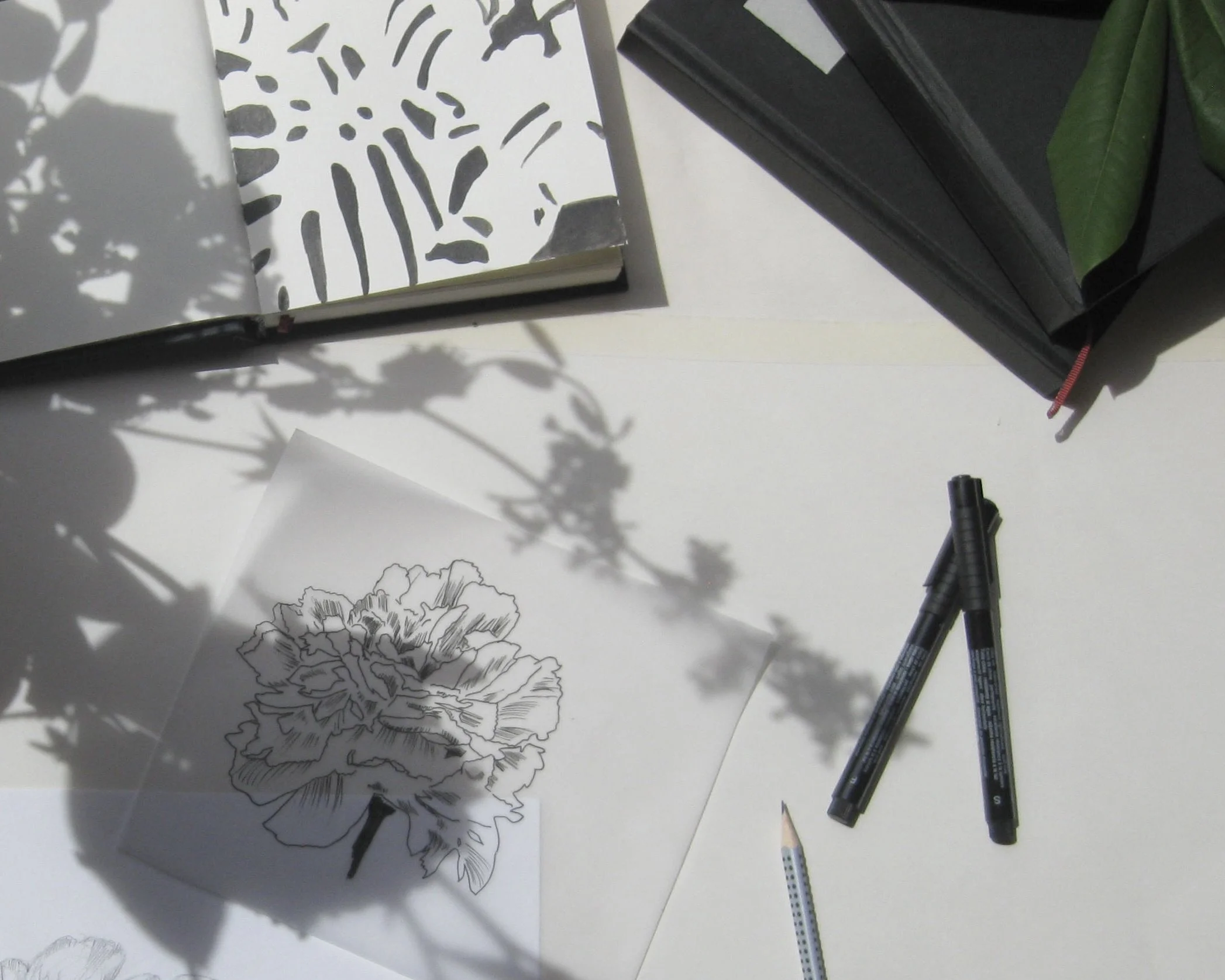
Finding stylized forms through drawing.
Over the years, this close observation of flowers, leaves and stems has built up a kind of inner library of forms, colours and textures. I can draw on it whenever I want to work freely, without a specific subject in mind. Alongside these memories, I keep a collection of drawings, printing experiments and leftover papers that often find their way into spontaneous collage work.
From Memory to Mark-Making
Working without a specific subject doesn't mean that nothing meaningful emerges. Quite the opposite: forms often develop from memories, impressions or emotions that I may not even be fully aware of at first.
A remembered plant might appear as a loose gesture rather than a recognisable shape. A particular curve, the movement of a leaf or the silhouette of a flower becomes a starting point for something new.
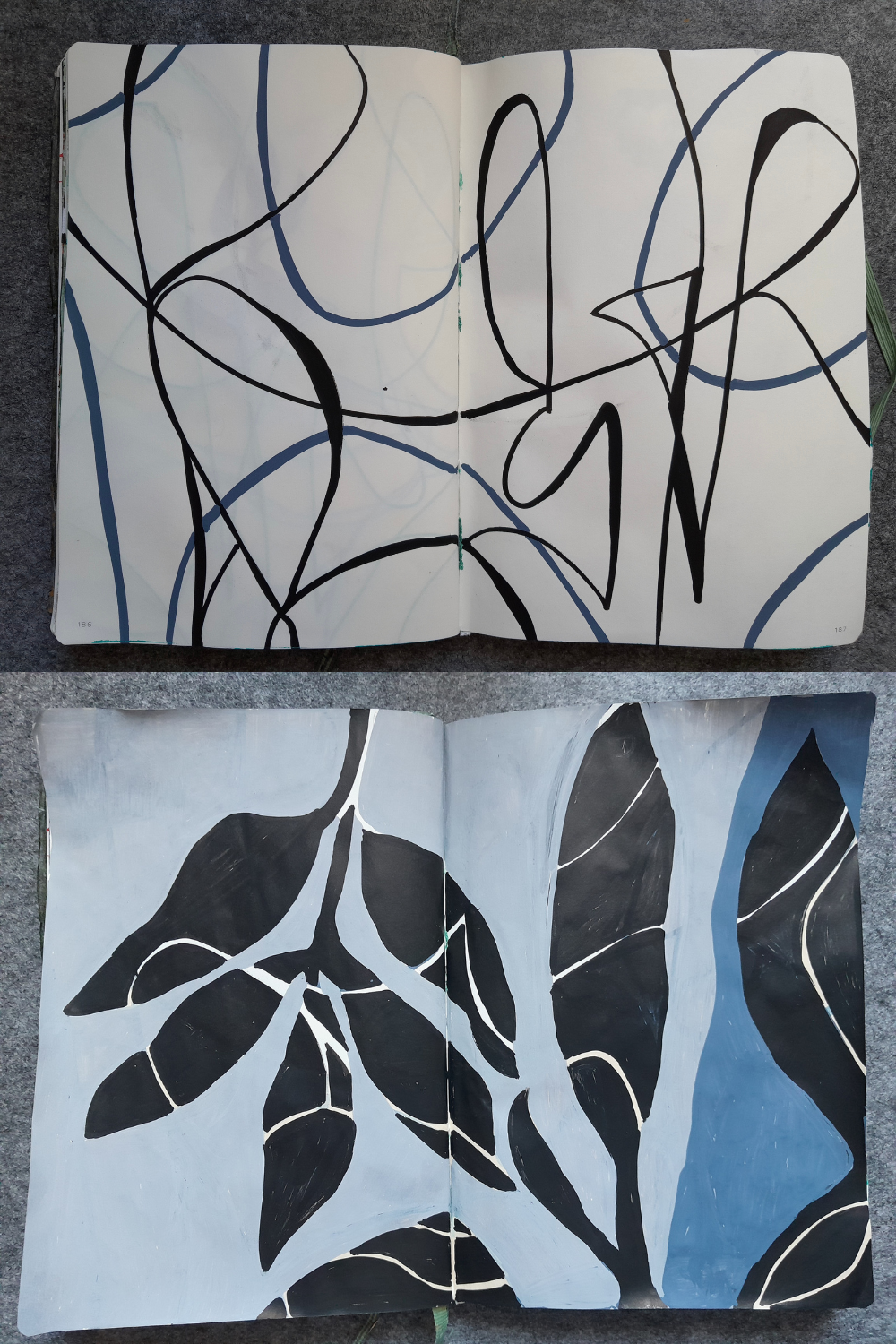
On this sketchbook page, I began with simple gestural marks made with acrylic markers. The resulting linework appears as a pattern within the overlaid botanical forms, bringing a lively rhythm to the overall composition of graphic elements.
It makes a difference whether I begin on a completely blank page or work over marks that are already there. On an untouched surface, the first gesture opens up a new space. When marks already exist, my next move becomes a response to them. I might emphasise a line, soften an edge or introduce a contrasting shape.
In this way, each new form grows out of two impulses: the desire to express something remembered or felt, and the need to respond to what is already present on the page.
Finding a Balance Through Contrast
Even when I work intuitively, I keep an eye on the overall composition. I look at what is already there, what might be missing and what could help the different elements feel more connected.
I often work with contrasts: large and small, light and dark, heavy and delicate, flat and textured, hard and soft, warm and cool. These opposites can create tension and energy, but they also need to relate to one another.
A large shape might need a smaller mark nearby to bring it into balance. A strong colour may become more interesting when placed next to a quieter one. Sometimes a line or a patch of colour acts as a bridge, linking two elements that initially seem unrelated.
I keep adding, moving, covering and adjusting marks until the different parts begin to interact. Each new gesture changes the relationships within the composition, and gradually, shapes emerge from the traces left behind.
The Value of Pausing and Looking Closer
One of the most useful moments in this process comes when I stop working for a while and take a closer look at what has developed. After several layers of paint, paper and mark-making, the surface may hold details I hadn't consciously planned or even noticed while working.
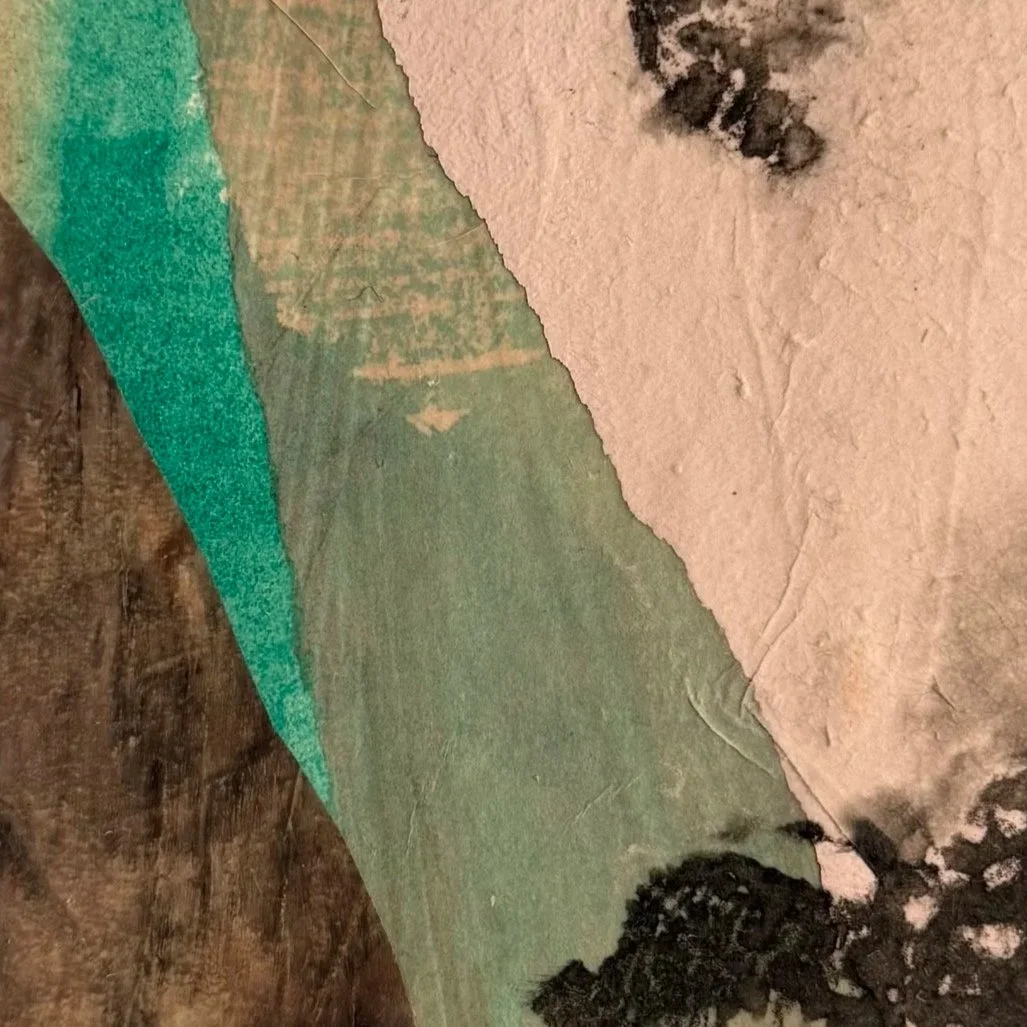
Detail view of a sketchbook piece.
I like to give these small discoveries some attention. What kinds of marks and shapes have appeared? Which textures have emerged? How do the colours influence one another? And what happens where two forms meet at their edges?
Looking closely can reveal possibilities that weren't obvious before. A small irregularity might become the starting point for a new shape. An unexpected colour interaction might suggest a change in the mood of the piece. A crowded area might need more breathing space, while an empty one could benefit from another mark.
These observations help me decide how to continue. I might simplify a form, strengthen a contrast or introduce a new element to bring the overall composition into balance. The process moves back and forth between making and looking, intuition and reflection.
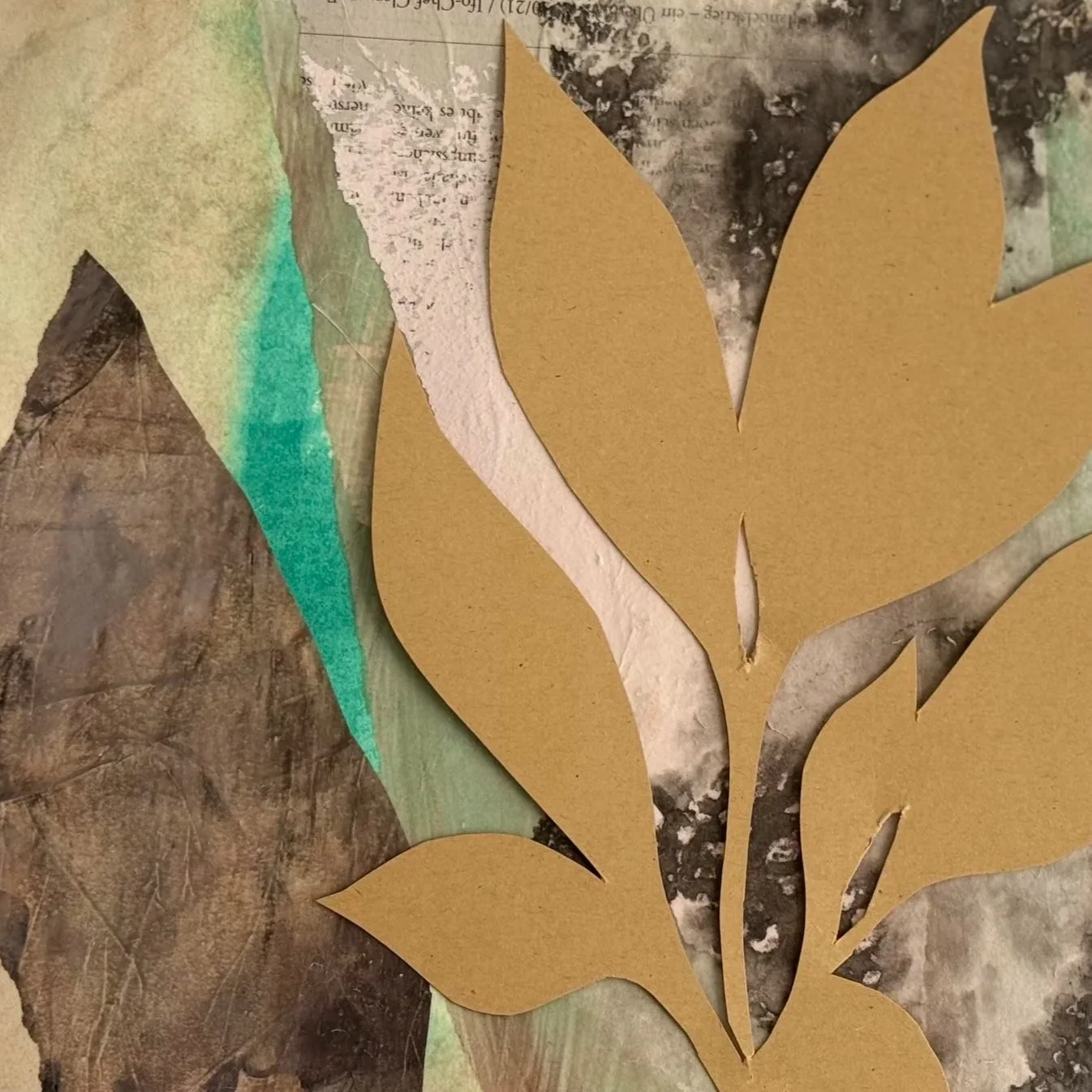
Engaging in a dialogue with what is already there by adding collage elements.
When Traces Become Forms
For me, this is where the transition from observation to abstraction becomes particularly interesting. A trace is more than a mark left on the surface: it occupies space, establishes a relationship with its surroundings and begins to take on a life of its own.
The original inspiration may gradually become less recognisable, yet something of its character remains. The movement of a leaf might survive in a curved line; the structure of a flower might reappear as an arrangement of shapes; the feeling of a particular colour combination might become the heart of the composition.
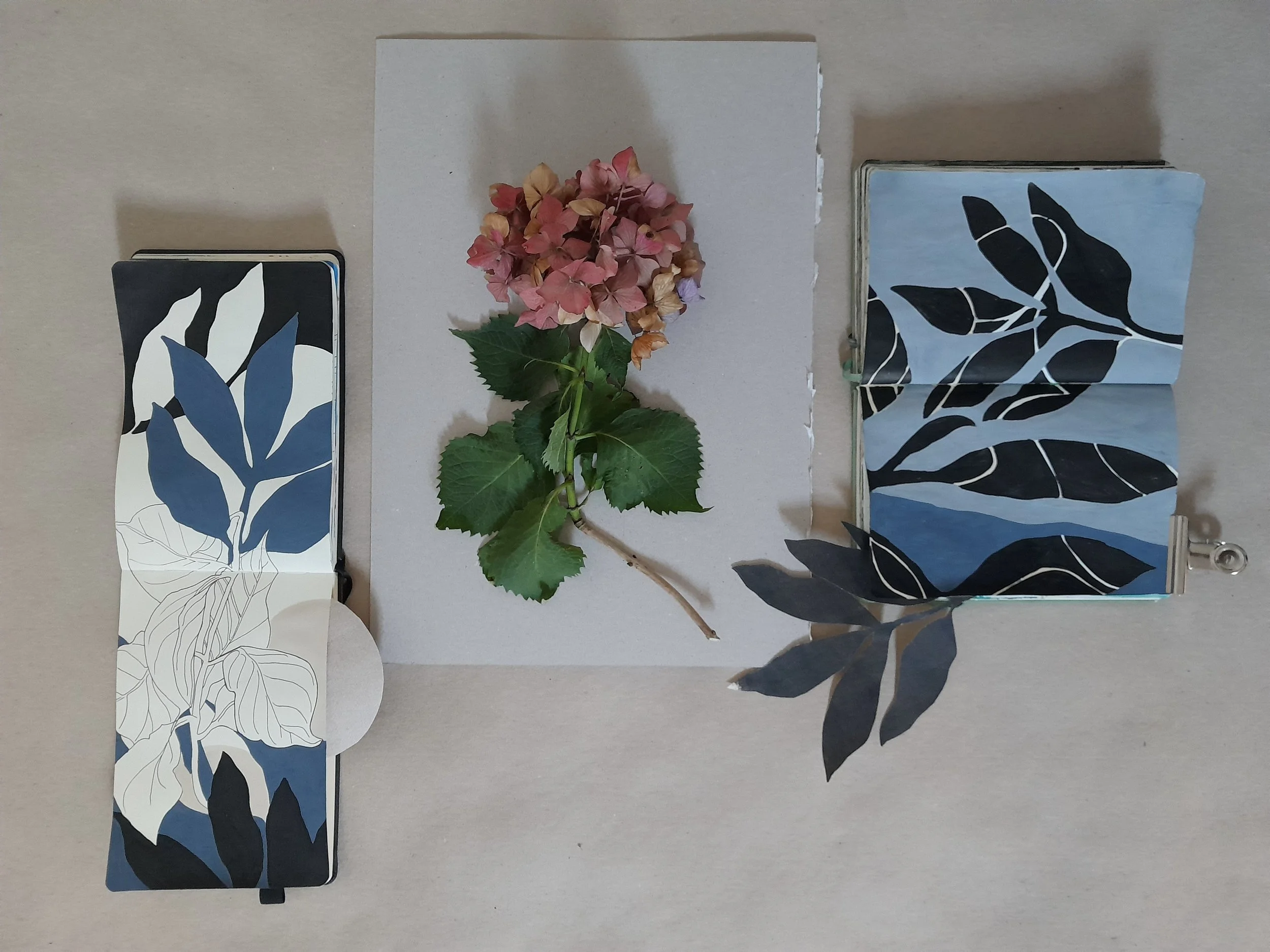
Stepping back, moving beyond the sketchbook, and finding greater variation.
What begins as a spontaneous experiment can develop into a carefully balanced image without ever losing its sense of discovery.
A few thoughts to take into your own creative practice:
Start with what attracts you. An interesting paper, a colour combination or a simple gesture can be enough to get going.
Draw on what you already know. Memories, observations and saved materials are valuable sources of inspiration.
Respond to what's there. Existing marks can suggest new directions instead of limiting your possibilities.
Explore contrasts. Differences in scale, colour, texture and shape can bring energy and balance to a composition.
Make time to pause. Stepping back and looking closely can reveal details and possibilities you might otherwise miss.
Let the process move between intuition and reflection. You don't need to plan every step; sometimes the next direction becomes clear only after you've stopped to look.
For me, abstraction isn't about abandoning the natural world. It's about discovering how much can grow from observing it, remembering it and allowing its forms to evolve through the simple act of making.
You can find my journal entry on discovering new sources of inspiration here.
I show more about this process on my Instagram.